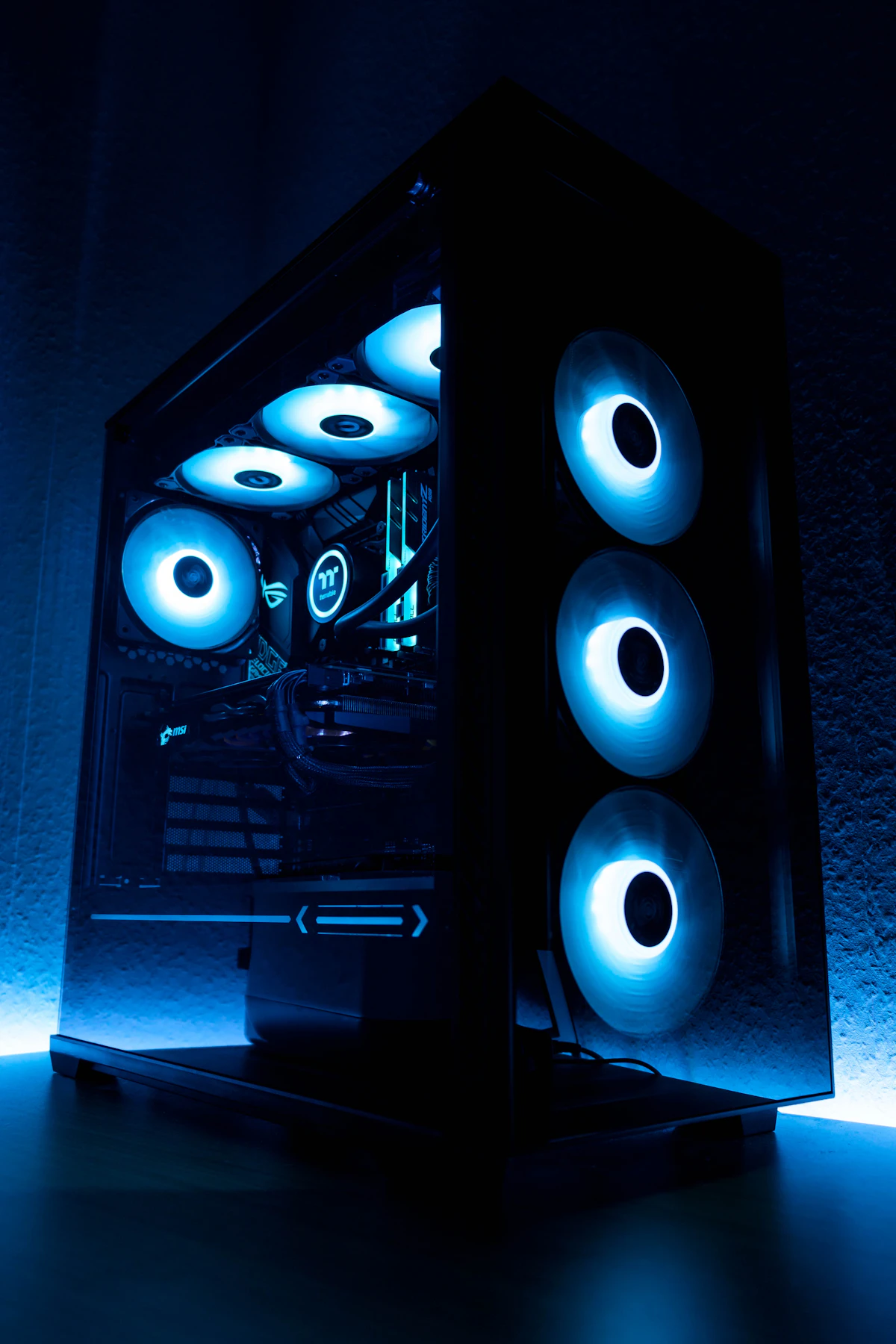
Open-loop liquid cooling is the pinnacle of enthusiast PC engineering. Achieving whisper-quiet operation under 600W+ combined CPU and GPU thermal loads requires understanding thermodynamic heat transfer, coolant flow resistance, and material compatibility.
1. Radiator Sizing & The 120mm per 100W Thermal Rule
Radiator surface area is the primary determinant of thermal headroom. As an engineering baseline, plan for at least 120mm of radiator length per 100 Watts of dissipated heat for low-RPM fan silence, aiming for a coolant Delta T (coolant temperature minus ambient room temperature) of less than 10°C.
2. Preventing Galvanic Corrosion: The Strict Metals Rule
Mixing copper, brass, or nickel-plated waterblocks with cheap aluminum radiators creates a galvanic battery. Electrolytic ions strip metal from aluminum and deposit it onto copper, causing rapid block clogging and coolant leaks. Always maintain an all-copper/brass loop.
3. Pump Dynamics: Laing D5 vs DDC Pressure Curves
The legendary Laing D5 pump utilizes a spherical ceramic motor lubricated by the coolant itself, delivering high volumetric flow rates with near-silent acoustics. For space-constrained SFF cases with high micro-fin restriction, DDC pumps provide higher static head pressure.
4. Tubing Physics: EPDM Rubber vs Hardline Acrylic/PETG
While rigid hardline acrylic offers show-stopping aesthetic geometry, industrial EPDM (ZMT) matte black rubber tubing is completely immune to plasticizer leeching, heat deformation, and micro-leaks.
5. Coolant Chemistry and Biocide Formulations
Pure distilled water treated with copper-safe corrosion inhibitors and non-conductive algaecides provides the highest specific heat capacity without leaving chalky pastel residue on block micro-channels.
Overclocker Tip
Always perform a 24-hour pneumatic air-pressure leak test using a dedicated hand pump before introducing liquid coolant into your chassis.