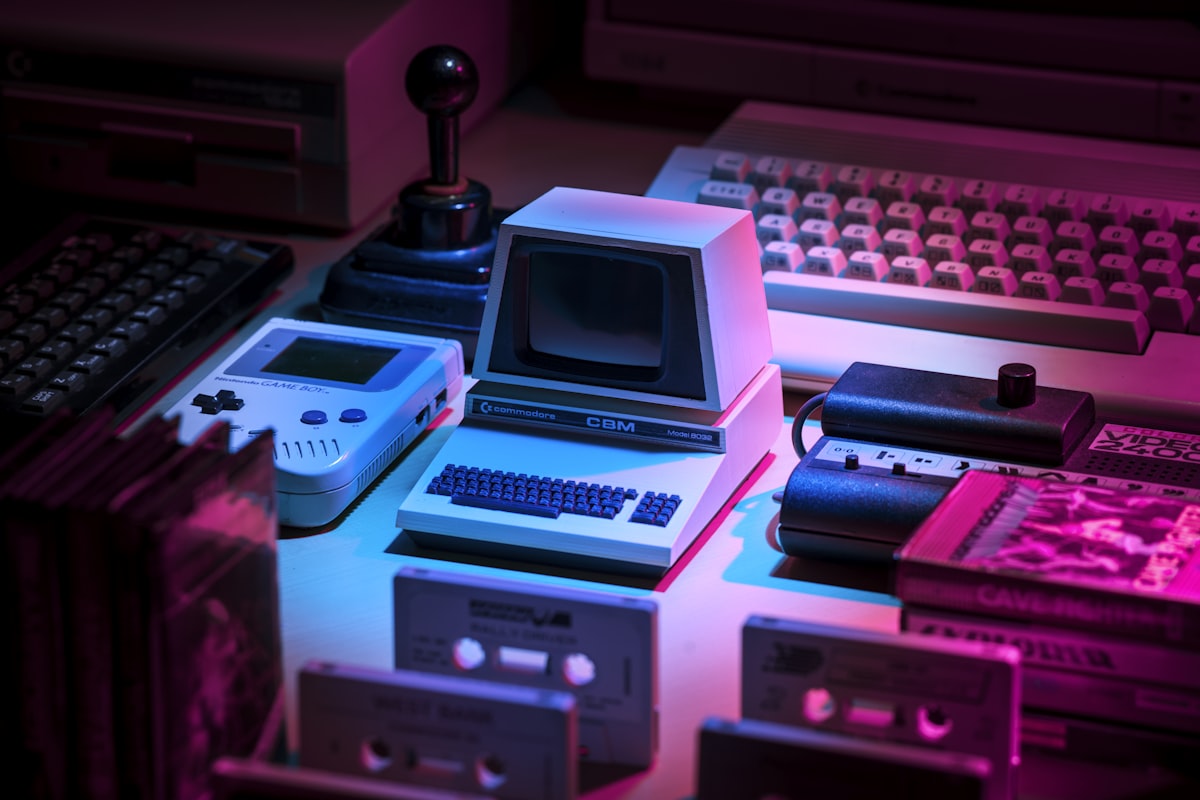
The golden era of computing—from 8-bit home computers to 16-bit arcade hardware—represents an extraordinary period of creative hardware architecture. Preserving these interactive artifacts requires combining analog electron optics with cycle-accurate digital logic synthesis.
1. The Physics of CRT Displays: Zero Latency & Beam Scanning
Vintage software was designed explicitly around the physical quirks of Cathode Ray Tubes: electron beams sweeping across phosphors with instantaneous zero-latency response, natural scanline gaps, and motion blur immunity that modern flat panels cannot replicate without complex BFI (Black Frame Insertion) shaders.
2. FPGA vs Software Emulation: Hardware-Level Cycle Accuracy
While software emulators introduce frame buffering delays, Field Programmable Gate Arrays (FPGA, like the MiSTer project) reconfigure physical logic gates to clone original Motorola 68000, Z80, and custom audio silicon at the clock-cycle level.
3. Component Maintenance: Electrolytic Capacitor Recapping
Late 80s and 90s hardware is plagued by failing surface-mount electrolytic capacitors that leak corrosive electrolyte onto delicate motherboard traces. Proactive recapping with high-temp Japanese capacitors is essential for hardware survival.
4. Solid-State Storage Replacements: SCSI2SD and Gotek Floppy Drives
Mechanical magnetic hard drives and floppy disks degrade over time. Modern flash-based emulators preserve original disk images on SD cards while maintaining authentic bus timing for vintage OS compatibility.
5. Digital Archiving of Ephemeral Computing History
Preserving original ROM dumps, technical schematics, and service manuals ensures that early digital craftsmanship remains accessible to future generations of engineers.
Preservation Rule
Always discharge the high-voltage anode on CRT flyback transformers before attempting chassis servicing.